


When people search for the best types of magnesium, the question often sounds simpler than it really is.
At first, it can seem like any magnesium supplement should do the job. But in practice, the form you choose can change the experience quite a bit. Are you looking for something that fits a calm evening routine? Do you want a daily option that feels gentler on your stomach? Or is constipation part of the picture too?
The real question is simpler: which form actually fits what you want magnesium for?
In this guide, we compare the most common magnesium forms in a practical way, so you can understand where glycinate fits in, when citrate becomes a smarter option, where malate stands out, and why oxide is not always the best place to start.
Some magnesium forms are used more often in sleep-focused products. Others are closely tied to laxative or antacid use. So it is not enough to see the word “magnesium” on the bottle and assume every option serves the same purpose.
Best types of magnesium can look similar on the bottle, but the right choice depends on whether your goal is sleep, stress support, digestion, or muscle support.
Quick Verdict
If you want the fast version, this is the clearest place to start:
No single form wins in every situation. The more accurate idea is that the better choice depends on your real goal, your stomach, and whether you want evening calm or broader daytime support.
Why the Type of Magnesium Matters in the First Place
The difference here is not just the name. It is how each form tends to fit into real use.
A common mistake is treating all magnesium supplements as if they were basically the same thing. They are not. Magnesium in supplements is attached to different compounds, and that can influence absorption, digestive tolerance, and how practical the product feels in daily life.
ODS notes that some magnesium forms, such as citrate, are absorbed more readily than magnesium oxide. It also points out that the elemental magnesium amount on the label is what matters most when you compare products.
That is why form is not a minor detail. It is part of the decision itself.

Magnesium Glycinate: Is It the Best Fit for Sleep and Stress?
If your main goal is better sleep, a calmer evening, or a supplement that feels easier to take consistently, magnesium glycinate is often the cleanest place to begin.
Not because it is magic, but because it tends to be a cleaner fit for people who want a calmer, easier evening routine.
But in practical supplement use, glycinate is often positioned as a calmer, gentler option, without the more obvious laxative pull associated with other forms. Mayo Clinic Press notes that magnesium glycinate may cause fewer gastrointestinal side effects than some other magnesium supplements, which makes it easier to tolerate for people with sensitive digestion or a history of loose stools. Cleveland Clinic also notes that magnesium glycinate is commonly used in products marketed for sleep.
That is why glycinate often ends up being the easiest place to start. Not that it is “the best” in every category, but that it often makes more sense for a very specific goal: someone who wants a more evening-friendly option with better odds of digestive comfort.
So if your real question is:
Which magnesium should I start with if sleep and stress are my top priorities?
Glycinate is usually the clearest answer.
That said, expectations still need to stay realistic. Mayo Clinic Press notes that magnesium is often marketed for relaxation and sleep, but that does not mean the evidence proves it works as a direct solution for everyone.
Magnesium glycinate usually makes the most sense for people who want:
- an evening-friendly magnesium routine
- a form that feels calmer than more digestion-driven options
- a gentler option for the stomach
- a starting point when sleep or stress is the main concern

Magnesium L-Threonate: Is It Worth Considering for Sleep or Mental Calm?
Magnesium L-threonate is better treated as a more niche option. It may be interesting to people who care about mental calm in the evening, but it is usually not the clearest first step for someone who just wants a practical magnesium supplement. For most readers, glycinate is still easier to understand and easier to start with.
L-threonate belongs more naturally among the specialized choices than inside the most general first answer.

Magnesium Citrate: When Does It Become the Smarter Choice?
Magnesium citrate starts to make more sense when the decision is not only about sleep, but also about constipation or bowel regularity.
ODS notes that citrate is among the magnesium forms that are absorbed more readily than magnesium oxide. MedlinePlus states that magnesium citrate is used to treat occasional constipation on a short-term basis, because it retains water in the stool and helps increase bowel movements. Cleveland Clinic similarly describes magnesium citrate as a saline laxative and says it should not be used regularly.
That changes the practical picture in an important way.
Citrate is not “worse” than glycinate. It simply serves a different scenario.
So if someone says:
I want magnesium, but constipation is part of the decision too
then citrate becomes a genuinely practical option.
But if the main goal is a calm evening routine and sleep support, without a clear reason to invite laxative effects, citrate is usually not the first form people look at.
MedlinePlus also notes that magnesium citrate is meant for short-term use, not ongoing daily use without guidance, and it can lead to looser or more frequent stools.
Magnesium citrate often makes the most sense for people who want:
- magnesium support with constipation also in the picture
- a form known for relatively good absorption
- a practical option when bowel movement support matters too
But it is usually not the cleanest first choice for someone mainly looking for a gentle evening magnesium routine.
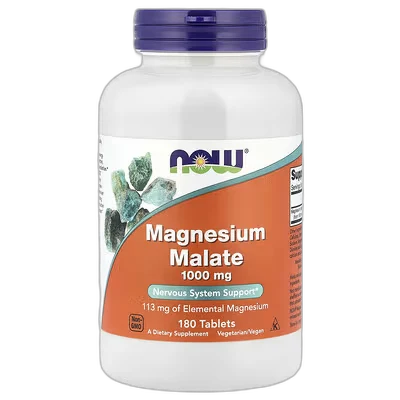
Magnesium Malate: Is It Better for Muscles and Daytime Use?
If your focus is less on sleep and more on daytime use, general routines, or muscle support, magnesium malate often feels like the more practical fit.
That said, it is important to stay precise here. The strongest official evidence from ODS centers on magnesium itself as a nutrient involved in muscle and nerve function, energy production, blood pressure regulation, bone health, and many enzyme systems. That is different from saying magnesium malate has been proven to outperform other forms specifically for muscles in every situation.
So when malate is placed in the “muscle support” category, the point is practical fit, not proven superiority.
In other words:
If your question is,
Which magnesium feels most aligned with evening calm and sleep?
glycinate is still clearer.
But if your question is,
Which one fits more naturally into a daytime routine where muscles and general function matter more?
malate starts to make more sense.
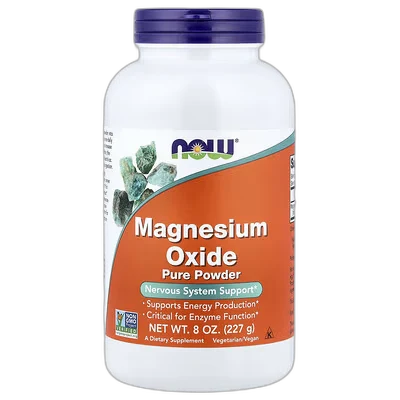
Magnesium Oxide: Why Is It Usually Not the Smartest Starting Point?
Magnesium oxide is one of the most common and widely available forms on the market, but that does not automatically make it the smartest starting point for this kind of goal.
Cleveland Clinic notes that magnesium oxide is commonly sold in contexts such as antacid use and migraine support. ODS also notes that forms like magnesium oxide are less well absorbed than citrate, and magnesium supplements commonly cause diarrhea or digestive upset, especially at higher doses.
So when the priority is sleep, stress, and muscle support in a more targeted, practical way, oxide is usually not the clearest first recommendation.
That does not mean it is bad in every situation. It simply means that if someone wants a more thoughtful match between supplement form and actual goal, other forms often offer a more useful starting point.
Best Types of Magnesium: A Quick Comparison Table

If you want the fast decision view, this table is the most practical shortcut
| Type | Best Fit For | Typical Use Style | Main Caution Points | When It Makes the Most Sense |
|---|---|---|---|---|
| Magnesium glycinate | Sleep, stress, evening routines | Evening-friendly | May still cause side effects; not a guaranteed sleep fix | When calm at night and digestive tolerance matter most |
| Magnesium citrate | Magnesium support with occasional constipation in the picture | Flexible | Can loosen stools or cause cramping; not for regular laxative-style use | When constipation is part of the decision too |
| Magnesium malate | Muscle support, daytime routines | Daytime | Not a proven cure for cramps in everyone | When muscle support matters more than bedtime calm |
| Magnesium L-threonate | A more specialized path | Specialized | Less direct practical evidence for general users | When you want a more niche, evening-leaning option |
| Magnesium oxide | Availability and price | General | More likely to bring digestive effects and less tailored fit | When cost or availability matters more than precision |
Important note: when you compare magnesium products, pay attention to the amount of elemental magnesium listed on the label. That is the number that matters most in real-world comparison, not the full weight of the entire compound.
Best Types of Magnesium: Which One Fits Your Goal Best?
And the most important point of all is this:
Stop looking for the best magnesium for everyone, because that question usually has no single useful answer.
The better question is:
Which type fits my goal, my stomach, and the way I actually want to use it?
That is what smarter supplement choice looks like.
What Should You Pay Attention to Before Choosing?
A lot of people buy the wrong form simply because they only notice the word “magnesium” on the bottle.
But the type is not the only thing that matters.
If your stomach is sensitive, this part matters more than most people expect.
Before buying any magnesium supplement, look at the elemental magnesium amount on the label, not just the total compound weight. Then pay attention to the total daily dose, digestive tolerance, and timing.
It is also important to think about medication interactions. ODS notes that magnesium can interfere with the absorption of some bisphosphonates and antibiotics, and interactions can also matter with certain diuretics and long-term proton pump inhibitor use. Kidney concerns also deserve caution.
And just as important: keep expectations realistic.
Magnesium is an essential mineral, and it can make sense in conversations around sleep, stress, muscles, and daily function. But choosing the “right form” does not automatically solve the whole problem. If sleep issues are chronic, stress is high, or cramps are recurring, a supplement may be part of the picture, not the whole picture.
Frequently Asked Questions
Final Takeaway
If your goal is sleep and a calmer evening, magnesium glycinate is usually the closest starting point.
If constipation is part of the picture, magnesium citrate may be more practical.
If you are looking at magnesium more from the angle of muscles and daytime use, magnesium malate often makes the most sense.
The goal is not to chase the “best” form on paper.
It is to choose the one that actually fits your goal, your digestion, and your daily routine.
In real life, that is usually what makes the difference.
Still Not Sure Which Type Fits Your Goal?
Use SelHealth’s Smart Supplement Guidance System to narrow your options based on your goal, digestive tolerance, and use pattern.
Then move into the Supplement Directory to compare formulas, strengths, and product positioning before you decide.
Sources
Built with reference to reputable health and medical sources to support clearer, more balanced, and more responsible supplement guidance.
- NIH Office of Dietary Supplements — Magnesium Fact Sheet
- MedlinePlus — Magnesium Citrate Drug Information
- Mayo Clinic Press — Magnesium Glycinate
- Cleveland Clinic — Magnesium Overview and Magnesium for Sleep